
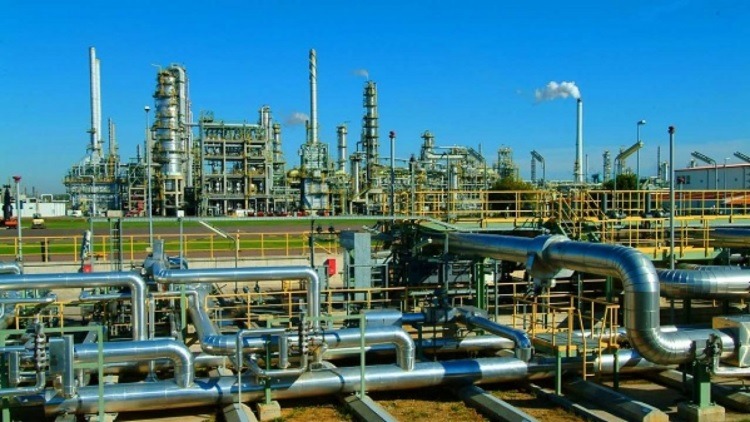
…crude oil supply to domestic refineries surpasses 40,000 barrels per day in 2025
In the four years since the enactment of the Petroleum Industry Act (PIA), the Federal Government has issued 23 licences to establish refineries across Nigeria.
The Nigerian Midstream and Downstream Petroleum Regulatory Authority (NMDPRA) disclosed this at the maiden conference of the Energy Correspondents Association of Nigeria (ECAN) in Abuja on Thursday. The event carried the theme: “Four Years of the PIA: Achievements, Gaps and the Road Ahead.”
Speaking at the conference, NMDPRA Director Legal, Tolurosho Joseph, who represented the authority, said the plants, once completed, would add over 850,000 barrels per stream day (bpsd) to Nigeria’s current refining capacity of 1,125,000 bpsd.
He stated, “From 2021 to date, 23 ‘License to Establish’ refineries have been issued. When constructed and commissioned, these plants will raise refining capacity by more than 850,000 bpsd.”
Joseph also noted a significant increase in crude oil supply to domestic refineries, rising from about 20,000 barrels per day (bpd) in 2023 to over 40,000 bpd in 2025.
According to him, this is enabled by NMDPRA’s implementation of 2021 PIA provisions.
Ahmed said refined product supplies from local refineries to the domestic market have experienced drastic improvement.
He specifically noted that Premium Motor Spirit (PMS) supply grew from 1.3 billion litres in 2024 to 3.8 billion litres in 2025, and the outlook is positive.
The Authority Chief Executive said the Midstream and Downstream Gas Infrastructure Fund (MDGIF) has Invested over N287 billion in various gas infrastructure projects with 16 companies across 62 projects as of October 2025.
He added that the MDGIF catalysed an additional $500 million investment to Gas infrastructure by leveraging on AFRIEXIM Bank MOU to expand energy access to drive economic development. Related News
According to him, UTM Offshore, NLNG train 7, AKK gas pipeline, OB3 gas pipeline, AIPCC refinery, Indorama fertilizer plant and Greenville’s LNG & LCNG projects, Walthersmith Refinery Train 2, Supertech’s Methanol Project are some of the key midstream and downstream facility development projects that brought significant investments into the sub-sector.
Read Also: NAFDAC destroys N20bn fake, substandard drugs in Ibadan
He also said 10 Gas distribution Licenses were issued for 10 gas distribution zones covering a pipeline network stretch of 692km, with carrying capacity of 712MMscf/day, connecting a total of 412 customers.
The NMDPRA boss said the total investment value in this distribution system was estimated at $639.07 million with multiplier effect across energy, agriculture, industry, manufacturing and socio-economic impacts.
According to him, the NMDPRA developed Gas Trading and Settlement Regulations in 2023, which applies to activities connected to the establishment of secure, reliable and efficient trading and settlement systems for natural gas and other gas commodities on exchange platforms regulated by the Authority.
This, he said, led to the Award of License to Establish and Operate the first ever Gas Trading Exchange in Nigeria in May 2025 to Jex Market Limited.
The Chief Executive of the Nigerian Midstream and Downstream Petroleum Regulatory Authority (NMDPRA), Farouk Ahmed, says efficient and prudent regulation by the Authority has ensured steady availability of petroleum products nationwide, maintaining product sufficiency for between 12 and 48 days on average.
Ahmed said this sustained supply had eliminated fuel shortages and helped stimulate economic activities across the country.
Speaking at the maiden Energy Correspondents Association of Nigeria (ECAN) conference in Abuja, Ahmed noted that in partnership with Platts S&P Global, the Authority organised the first-ever West African Product Reference Market Conference in May 2025 — a milestone event that produced key resolutions.
According to him, one of the major outcomes of the conference was an agreement to position Nigeria, particularly Lagos, as a subregional hub for product price referencing and market offtake.
Reflecting on the significance of the event, Ahmed observed that it coincided with the fourth anniversary of the NMDPRA’s establishment under the Petroleum Industry Act (PIA) 2021.
“To be invited at a time when we, as a regulatory agency, are marking the fourth anniversary of our establishment — to reflect on our achievements, challenges, and prospects within the context of our mandate under the Petroleum Industry Act — is indeed a commendable coincidence,” he said.
“In the last 4 years, whenever I have had the opportunity to speak about our achievements and challenges at the NMDPRA, it always fills me with pride because on each occasion I am able to report that we are making very tangible progress at each step of the journey, even as we learn new ways to surmount challenges or turn them into building blocks of growth as an agency.
“And today, with the theme “Four Years of the PIA: Achievements, Gaps and the Road Ahead’’, I believe we have another big opportunity to profoundly reflect on the journey so far and to showcase to the world just how far we have been able to positively change the dynamics of regulation in the midstream and downstream oil and gas sector.”