
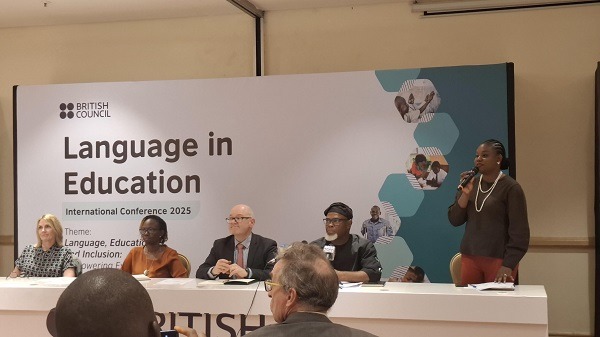
The Federal Government has scrapped the national policy mandating the use of indigenous languages as the medium of instruction in schools, citing poor student performance in public examinations.
According to the government, pupils taught in their mother tongue have recorded persistently low results in external assessments.
Minister of Education, Dr. Tunji Alausa, announced the decision on Wednesday at the 2025 Language in Education International Conference organised by the British Council in Abuja.
In 2022, the government had approved a National Language Policy (NLP) which required the use of indigenous languages or the language of the immediate community from Early Childhood Education to Primary Six.
The policy was intended to promote local languages, uphold their equal status, and strengthen early learning outcomes, while English remained the medium of instruction at higher levels and in official communication.
Read Also: Senate approves Tinubu’s ₦1.15trn domestic loan to fund 2025 budget
However, speaking at the conference, Alausa said English is now the language of instruction in Nigerian schools from primary to tertiary levels.
The minister stated that the decision to cancel the policy was based on extensive data analysis and evidence showing that the use of the mother tongue as the primary medium of instruction had negatively impacted learning outcomes in several parts of the country.
He said, “We have seen a mass failure rate in WAEC, NECO, and JAMB in certain geo-political zones of the country, and those are the ones that adopted this mother tongue in an over-subscribed manner.
“This is about evidence-based governance. English now stands as the medium of instruction from the pre-primary, primary, junior secondary, senior secondary and to the tertiary education level.
“Using the mother tongue language in Nigeria for the past 15 years has literally destroyed education in certain regions. We have to talk about evidence, not emotions.”
According to him, data gathered from schools across the country revealed that students taught primarily in indigenous languages recorded higher failure rates in national examinations and struggled with basic English comprehension.
He said, “The national policy on language has been cancelled. English now stands as the medium of instruction across all levels of education.”
The minister urged stakeholders with differing views to present verifiable data to support their positions, adding that the government remained open to evidence-based dialogue that would strengthen the education sector.
He commended the British Council for its continued partnership with Nigeria in advancing education reforms and promoting inclusive language and learning policies.
Minister of State for Education, Prof. Suwaiba Ahmed, has disclosed that the Federal Government has developed a new training package for teachers to strengthen literacy and numeracy learning in basic education.
Prof. Ahmed said the initiative is designed to equip teachers at the foundation level — from pre-primary to Primary Three — with improved methods for teaching reading, writing, and arithmetic.
“We are designing a training package for teachers that focuses on literacy and numeracy. This specifically targets those teaching pupils at the foundational level. We are training them on the best approaches to deliver literacy and numeracy lessons effectively,” she said.
Also speaking, the Country Director of the British Council in Nigeria, Donna McGowan, reaffirmed the organisation’s commitment to supporting Nigeria’s education reforms.
“We are committed to working hand-in-hand with the ministry. Our focus covers teacher professional development, school leadership, and language proficiency across all areas of education,” McGowan said.