Corporates raised over N753 billion between April and October 2025 to meet short-term funding requirements across key sectors of the economy, reflecting sustained demand for working capital financing.
Commercial paper is a short-term, unsecured promissory note issued by large companies to fund operational and liquidity needs without recourse to collateral.
The instruments typically mature within a few days to one year and are widely deployed by firms seeking quick access to relatively low-cost financing.
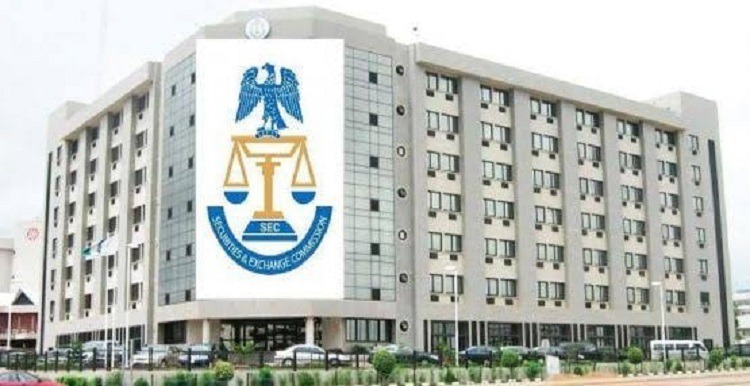
In a statement on Sunday, the Securities and Exchange Commission (SEC) said the strong performance of the commercial paper segment underscored robust activity across manufacturing, energy, agriculture and other productive sectors.
SEC Director-General, Dr Emomotimi Agama, said: “Commercial paper issuance remained vibrant, with over N753 billion raised to support short-term funding needs across diverse sectors, from manufacturing to energy and agriculture.”
He explained that the momentum formed part of a broader pipeline of capital-raising transactions approved by the Commission during the review period, spanning debt, equity and short-term instruments.
Read Also: Sokoto bombing: Edun reassures investors on Nigeria’s security, economy
According to him, “the Nigerian capital market has demonstrated remarkable depth and adaptability. Between April and October 2025, the Commission approved significant transactions across debt, equity and commercial paper segments, underscoring the market’s capacity to mobilise capital for growth. These achievements are critical to positioning the Nigerian capital market as a catalyst for sustainable economic growth.”
Agama said the debt capital market also recorded landmark transactions, including the N500 billion Climate Funding Special Purpose Vehicle issuance and the N200 billion Elektron Finance bond, signalling rising appetite for infrastructure-linked and sustainable finance instruments.
“These figures go beyond statistics; they reflect growing confidence in our regulatory framework and the resilience of our market architecture,” the SEC chief said.
He added that recent macroeconomic developments have improved investor sentiment, citing Nigeria’s sovereign credit rating upgrade and its removal from the Financial Action Task Force (FATF) grey list as strong signals to both local and foreign investors.
“These developments are not symbolic; they point to renewed confidence in the economy. They will drive higher investment flows and strengthen capital inflows, reinforcing the stability and growth outlook of our financial markets,” he said.
On inflation, Agama said moderating price pressures were opening space for innovation in the capital market and urged operators to accelerate the rollout of new products and platforms.
“This is a clear call to action. Innovation must move beyond policy documents. We need tangible products and accessible platforms that respond to the needs of today’s investors,” he said, stressing that “the era of passive observation is over. Our shared duty is to activate these opportunities and position the capital market as a true engine of inclusive growth.”
The SEC boss also addressed the sharp market correction in November, when the Nigerian Exchange shed about N6.54 trillion in market capitalisation, attributing it to profit-taking ahead of the proposed 30 per cent Capital Gains Tax, weak banking stock sentiment and global economic headwinds.
He, however, said the market has since rebounded on the back of policy assurances and improving investor confidence. “Despite November’s volatility, the Exchange remains solidly positive year-to-date, with gains that reflect the underlying strength of the market,” he said.
Agama further highlighted ongoing structural reforms, including the recent migration of the equities settlement cycle from T+3 to T+2.
“Shortening the settlement period has boosted liquidity, reduced counterparty risk and accelerated capital reinvestment,” he said, adding that work is ongoing toward a transition to T+1 and ultimately T+0.
He noted that these reforms, alongside efforts to deepen commodity trading and broaden bond market participation, would enhance Nigeria’s standing as a leading investment destination in Africa.
“These initiatives, combined with continued market deepening, will firmly position Nigeria as a premier investment hub on the continent,” Agama said.