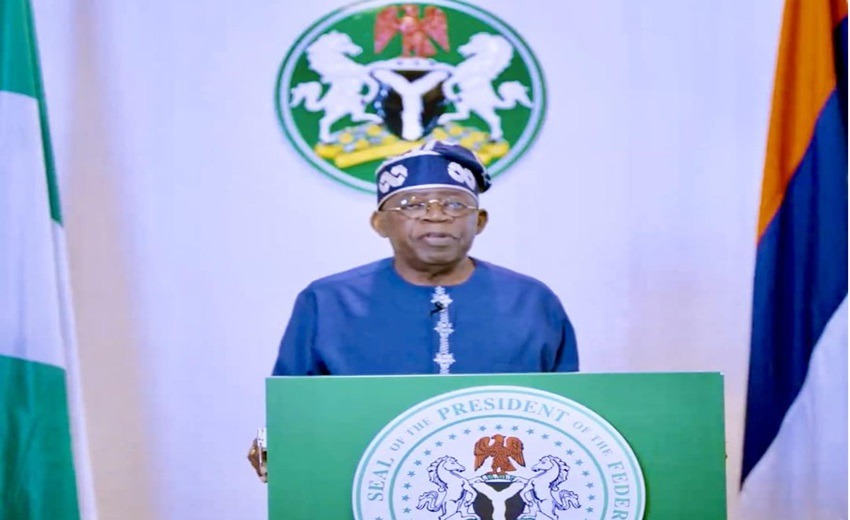
President Bola Tinubu has urged judges across the country to uphold the highest standards of integrity and judicial independence, warning that no nation can endure the weight of a corrupt Judiciary.
The President, who acknowledged rising public concerns over judicial credibility, said a just society cannot be built without a fearless and functional Bench.
“Let us be clear: no reform can succeed where integrity is compromised. Justice must never be for sale, and the Bench must never become a sanctuary for compromise,” he said.
Tinubu cautioned that while corruption in any arm of government is damaging, corruption within the Judiciary “destroys the nation at its core.”
“When justice is compromised, governance loses its integrity, and democracy loses its foundation,” he added.
The President further noted that even when judgments are legally sound and clearly delivered, they lose moral force if the public does not perceive them as fair and untainted.
“Public confidence is not an abstract ideal; it is the living measure of the Judiciary’s legitimacy and the true currency of justice,” he said.
“We must acknowledge, with candour, that public perception of the judicial process has not always been favourable.
“Citizens have expressed frustration at delays, concerns about integrity, and anxiety over access to justice. These perceptions, whether wholly justified or not, cannot be ignored.
“They call upon us to reflect, to reform, and to restore. For ultimately, justice does not exist for the Bench or the Bar; it exists for the people. Their faith in the judicial process is the foundation of our national stability,” he said.
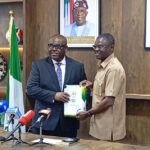
President Tinubu, who spoke in Abuja on Monday at the 2025 All Nigerian Judges’ Conference of the Superior Courts, said his administration would support all efforts by the Judiciary to preserve its integrity.
The weeklong event, organised by the National Judicial Institute (NJI), headed by Justice Babatunde Adejumo, has as its theme: “Building a Confident Judiciary.”
President Tinubu said, “With utmost seriousness, my administration stands ready to support every effort by the Judiciary to preserve its dignity and eliminate misconduct.
“This is not a task for the National Judicial Council alone; it is a collective duty that rests on every judicial officer.
“Discipline within the Judiciary must be firm, transparent, and consistent. Only a Judiciary that cleanses itself can command the moral authority to cleanse society,” he said.
President Tinubu, who noted the Judiciary’s contribution to the sustenance of the nation’s democracy, promised his administration’s support in addressing the challenges hampering effective delivery of its constitutional mandate.
Read Also: NDLEA busts wanted Lagos drug baron, uncovers large drug shipment, foreign currency
He added, “My administration believes that a Judiciary that is strong in capacity, efficient in process, and uncompromising in integrity is not merely desirable; it is indispensable to the survival of our democracy and the prosperity of our nation.
“We cannot build a just society without a fearless and functional Judiciary. In this regard, I wish to reaffirm, with clarity and conviction, the unwavering commitment of my administration to supporting the Judiciary in fulfilling its constitutional mandate.
“The Judiciary does not exist in isolation; it functions within a larger democratic framework in which all three arms of government must work in synergy, with mutual respect and shared responsibility to the Nigerian people.
“The Executive, the Legislature, and the Judiciary must remain united by purpose, even when separated by function,” he said.
The President tasked participants at the conference to be frank and critical in their discussions to enable them to identify necessary solutions to existing challenges in the sector.
He added, “My Lords, as you deliberate in the coming days, I want you to remember that the Judiciary is not an end in itself; it is an instrument of justice for the people.
“Its moral power flows not merely from the Constitution, but from the trust and confidence that ordinary citizens repose in it.
“A courageous, transparent, and principled Judiciary is the greatest guarantee of freedom; a slow, compromised, or disconnected Judiciary is its greatest threat.
“This is why I urge you, in your discussions, to be bold and practical. Go beyond diagnosing old challenges and commit to actionable solutions.
“Ask the difficult questions on: How do we reduce the backlog of cases? How do we strengthen discipline within the ranks?
“How do we make justice more affordable and accessible to the poor, the weak, and the voiceless? And above all, how do we build a Judiciary that truly remains the last hope of the common man?”
President Tinubu, who hailed the Judiciary for its many interventions in the past, recalled that “whenever Nigeria has faced moments of uncertainty, history has recorded that the Judiciary stood firm as the stabilising force of our national life.
“It is through the courage of judges and their judicial pronouncements that tyranny has been restrained, constitutional order preserved, and the voice of justice amplified above the noise of division or despair.
“For this enduring role, I extend, on behalf of the Government and the people of Nigeria, our deepest gratitude and abiding respect,” he said.
President Tinubu, who stressed the need for a modernised and efficient Judiciary, assured of support for the NJI to enable provide the required training for the judicial officers, who constitute the driving force of the judicial system.
He added, “A digital, transparent judiciary will not only improve efficiency, but will also deepen accountability and public trust.
“We should not leave any of our courts behind in this transformation. Yet, bricks and mortar or even digital screens do not make justice.
“The true strength of the Judiciary lies in the men and women who interpret the law and give life to its spirit.
“Our judges are the living custodians of justice; the calibre of their work defines the moral strength of the republic.
“That is why judicial welfare, training, and independence are not privileges; they are imperatives,” he said.