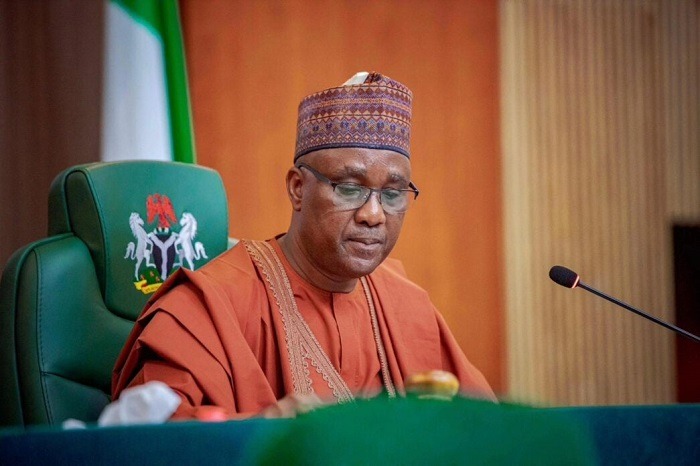
Speaker of the House of Representatives, Abbas Tajudeen, has declared that President Bola Ahmed Tinubu’s reform agenda is already yielding results for Nigeria’s development.
He acknowledged that the policies “have been tough but necessary,” noting that they require patience and demand sacrifice from citizens.
According to him, the reforms are driving “gradual stabilisation of exchange rates, improved fiscal discipline, growth in agriculture, better revenues for states, and a return of investor confidence,” which he described as clear signs that “the path we are on is the right one.”
Abbas made the remarks in Lagos on Sunday during the presentation of utility vehicles to selected traditional rulers from Southern Nigeria, a gesture facilitated through the Small and Medium Enterprises Development Agency of Nigeria (SMEDAN).
It was the second phase of such support to southern traditional institutions, following an initial round in May where six royal fathers benefited. Across the country, previous beneficiaries have included first- and second-class traditional rulers in Ekiti, Ogun, Osun, Edo, Delta, Ebonyi, Imo, Sokoto, Kaduna, Niger, Taraba, Nasarawa and the FCT.
Sunday’s beneficiaries included the Ayangburen of Ikorodu; the Onikate of Ikate; the Paramount Ruler of Okobo Land in Akwa Ibom; Igwe Fidelis Ogbu of Enugu; Igwe Dr. Robert C. of Anambra; and Oba Arole-Agbala of Ondo, among others.
Abbas stressed that the interventions were not mere gestures of convenience but a recognition of the “indispensable contributions of our traditional leaders to peacebuilding, conflict mediation, religious harmony, cultural preservation and community development.”
“We remain firmly convinced that the cultural and traditional pillars of Nigeria must be supported, respected, and empowered because a stable nation begins with strong, trusted institutions at the grassroots.
“These vehicles are not gifts of comfort. They are tools for duty. They enhance the mobility and effectiveness of leaders who remain the first and most trusted point of contact for millions of our citizens.
Read Also: Tinubu sends emissary to engage Christian, Fulani leaders in Plateau
“Traditional rulers are essential for conflict resolution, local intelligence, community mobilisation, and cultural stability. When they lack mobility, their ability to respond to emergencies, support development initiatives, and liaise with the government is limited. Enhancing their capacity is, therefore, a strategic investment in peace, order, and grassroots governance.”
The Speaker maintained, “Stable and credible traditional institutions are not a luxury. They are essential pillars of national cohesion. Supporting them does not compete with investments in schools, hospitals, or infrastructure. On the contrary, our action reinforces those investments by ensuring that communities are stable, organised, and receptive to development.
“More importantly, our intervention aligns fully with the Renewed Hope Agenda of President Bola Ahmed Tinubu, which places strong institutions and community-rooted leadership at the heart of national renewal.”
Speaker Abbas stated that it is in recognition of the critical role traditional rulers play that the National Assembly is pursuing a constitutional amendment to define and protect such role.
He said the President Tinubu administration shares the conviction that the traditional institution is critical to the country’s development, which was why the President has consulted royal fathers across the country.
“He has invited them into major conversations on security and development. He has acknowledged their stabilising influence in moments of tension. His Renewed Hope Agenda recognises that national progress must begin in communities and harness the credibility of natural leaders. It is within this same spirit of reform and partnership that the broader economic measures of his administration must be understood.”
The Speaker stressed the need to safeguard the progress already recorded, warning that Nigeria cannot afford to backslide. “The reforms underway must be completed, consolidated and carried forward beyond 2027. This requires unity of purpose and consistent leadership,” he said.
He urged traditional rulers to deploy their influence and moral authority to ensure stability and continuity. “I therefore call on our revered traditional rulers to lend their voices, their influence, and their moral authority to ensure continuity in the years ahead, so that the work we have started is not abandoned midway.”
Abbas also pledged that the House would remain a dependable partner, committed to upholding constitutional protections that strengthen and elevate the traditional institution.