Senator Jimoh Ibrahim, representing Ondo South Senatorial District, has expressed confidence that President Bola Ahmed Tinubu will adopt a liberalism-driven approach — centred on cooperation, corporations, and collaboration — to tackle insecurity and deepen Nigeria’s relations with global allies, particularly the United States.
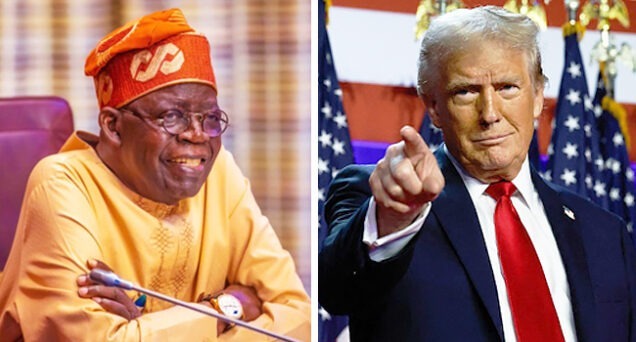
Ibrahim, who chairs the Senate Committee on Inter-Parliamentary Affairs, dismissed claims of friction between President Tinubu and former U.S. President Donald Trump, noting that both leaders share liberal democratic values that prioritise dialogue over confrontation.
In a statement personally signed and issued on Sunday, the lawmaker urged Nigerians to remain calm, stressing that “democratic liberal states do not go to war with each other.”
“In cooperation and collaboration, we engage and determine a new international order in a geocentric system,” he said.
Blending humour with intellect, Ibrahim described himself as a close associate of both leaders.“Tinubu and Trump will not fight one another. What is more, T vs T or T plus T is usually T², no further mathematics is required,” he noted.
Read Also: EXPOSED: (FULL LIST) Names Of People Behind Trump’s Threat To Tinubu Revealed
The senator revealed that he once lived in Trump Tower, describing Trump as his former landlord and Tinubu as his political father.“I know them, their praxis, and their taxonomies,” he added, echoing Winston Churchill’s line that “they simply jaw-jaw, not war-war.”
His remarks follow controversy over Trump’s recent comments alleging a “genocide” against Christians in Nigeria, a claim that has sparked global reactions and diplomatic concern.
The Federal Government has since dismissed Trump’s comments as “misleading and unreflective of reality,” stressing that insecurity in Nigeria affects both Christians and Muslims and is driven largely by terrorism, banditry, and resource conflicts.
Analysts say President Trump’s remarks could strain Nigeria-U.S. relations. But Senator Ibrahim’s intervention, they note, underscores the need for calm diplomacy, constructive dialogue, and international cooperation in addressing security challenges.