
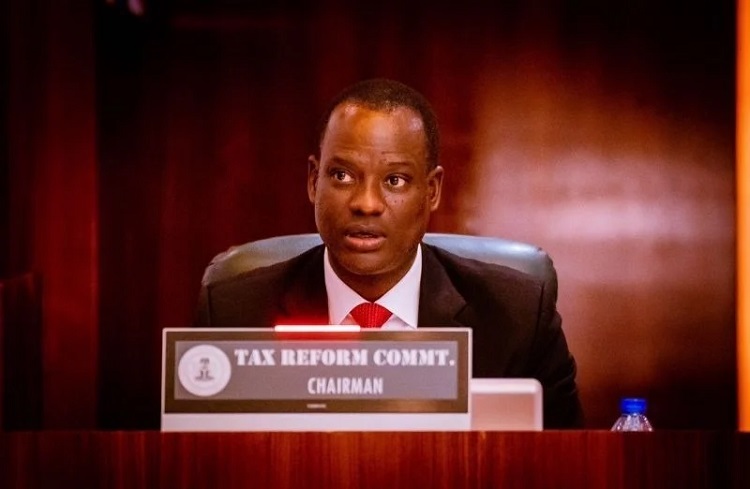
The Federal Government has reaffirmed its resolve to begin full implementation of Nigeria’s landmark tax reforms on January 1, 2026, ruling out any further postponement.
The Chairman of the Presidential Committee on Fiscal Policy and Tax Reforms, Mr Taiwo Oyedele, gave the assurance after a high-level meeting with President Bola Ahmed Tinubu on Friday, December 26, 2025.
Oyedele said the final phase of implementation—covering the Nigeria Tax Act and the Nigeria Tax Administration Act—remains firmly on schedule, stressing that the reforms are designed to deliver broad-based relief to Nigerians.
The confirmation was contained in a video shared on X by the President Bola Ahmed Tinubu Media Centre, following the President’s meeting with the Tax Implementation Committee led by Oyedele.
According to him, the government’s decision to proceed as planned is anchored on the “pro-people” character of the new tax laws, which are structured to ease the burden on low-income earners and small businesses.
He disclosed that about 98 per cent of Nigerian workers and 97 per cent of small businesses will either be exempt from taxes or enjoy significant reductions under the new regime.
Read Also: Less than 10m Nigerians pay personal income tax, says Oyedele
“The plan to commence the remaining two laws on January 1, 2026, will go ahead because the reforms are designed to provide relief for the majority of Nigerians,” Oyedele said.
He explained that the reforms aim to reduce financial pressure on citizens and businesses, stimulate economic activity and promote inclusive growth.
Under the framework, the bottom 90 per cent of salaried workers will either be fully exempt from Pay-As-You-Earn (PAYE) tax or see their liabilities substantially reduced.
Similarly, 97 per cent of small businesses will be exempt from Corporate Income Tax, Value Added Tax (VAT) and Withholding Tax, while larger companies will benefit from lower tax rates.
“These reforms are structured to provide direct relief to the Nigerian people,” Oyedele said, noting that the overarching objective is to drive economic growth, inclusion and shared prosperity.
He said the reform process had followed a rigorous path, with the bills subjected to a nine-month legislative review at the National Assembly between October 2024 and June 2025.
Following presidential assent, Oyedele said the committee has spent the past six months preparing for implementation through capacity building, system upgrades and nationwide sensitisation.
“Our internal preparations began from day one,” he said, adding that the groundwork was aimed at ensuring a seamless rollout.
While expressing optimism ahead of the launch date, Oyedele acknowledged that major policy reforms require constant fine-tuning.
“We are encouraged by the progress made so far and look forward to the January 1, 2026, commencement,” he said, adding that the committee remains committed to continuous improvement.
The confirmation cements the implementation timeline for one of the Tinubu administration’s most far-reaching economic reforms, with Nigerians now awaiting its impact from 2026.