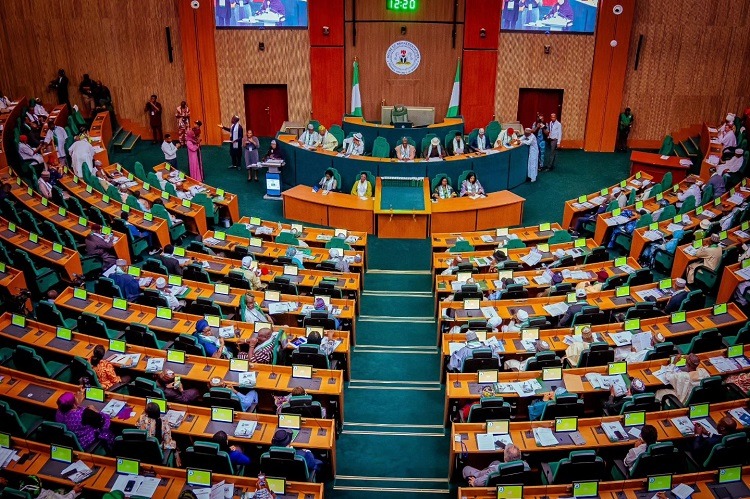
The House of Representatives Joint Committee on Petroleum Resources (Downstream and Midstream) on Monday intervened in the escalating dispute between Dangote Refinery Group and the Nigerian Midstream and Downstream Petroleum Regulatory Authority (NMDPRA).
The committee has formally invited both parties to present their grievances before lawmakers and urged them to suspend all media hostilities pending the outcome of the investigation.
Chaired by Ikenga Imo Ugochinyere and Henry Okogie, the committees expressed concern over the growing tension, warning that it could undermine the fragile stability recently achieved in the sector. Stakeholders had raised alarm over the public dispute, which involves allegations and counter-allegations between Alhaji Aliko Dangote and the NMDPRA leadership.
Ugochinyere said the committees acted swiftly to prevent further escalation, noting the timing was critical as government and industry players work to stabilise fuel supply, pricing, and regulation in the post-subsidy era.
Read Also: Buhari’s leadership proved public office is a sacred responsibility – Tinubu
“The key issue necessitating this emergency meeting is the rising tension in the downstream sector following concerns raised by Alhaji Aliko Dangote against the NMDPRA,” Ugochinyere said. “The committee resolved to invite both the Dangote Group President and the NMDPRA leadership to appear before us and provide detailed explanations so we can deliver decisions and resolutions that address the dispute.”
He stressed that a clear understanding of the underlying issues is essential for the National Assembly to broker lasting solutions. “Sustainable solutions can only be found once we identify the critical issues causing this tension. That is why the committee has written to Aliko Dangote and the NMDPRA chief to meet with us and provide insights into the allegations and counter-allegations. We also urge both parties to cease all media attacks to prevent further escalation.”
Ugochinyere revealed that the committee has received petitions on key industry matters, including the issuance of import licences and whether domestic refineries can meet Nigeria’s daily petroleum demand. “These are serious issues, and our investigation will address them comprehensively,” he said.
He assured that all outstanding concerns would be examined when Dangote, the NMDPRA, and other stakeholders appear before the committee. “By the time they meet with us, we will understand the real issues and provide resolutions that offer sustainable solutions for the sector,” Ugochinyere said, reiterating the committee’s call for a temporary ceasefire between the contending parties.
The intervention underscores heightened public scrutiny of Nigeria’s downstream petroleum industry, particularly as expectations rise around local refining capacity, regulatory clarity, and stable fuel supply.