
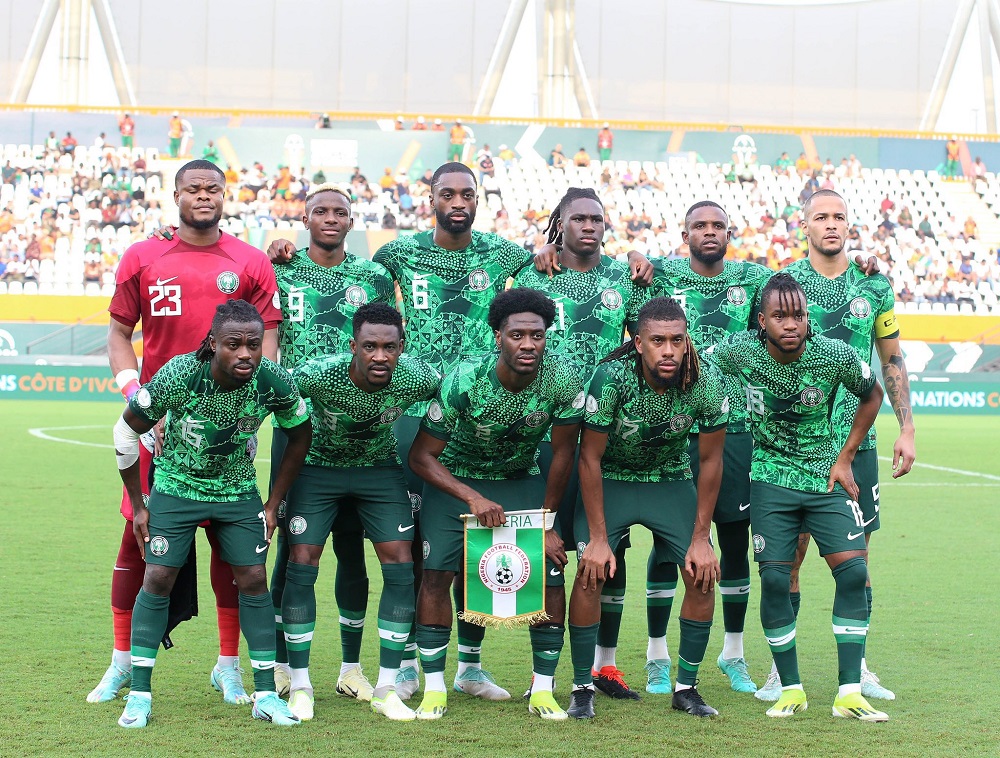
Nigeria’s foremost stadium turf specialist and Chief Executive Officer of Monimichelle Sports Facilities Construction Limited, Ebi Egbe, has warned that poor playing surfaces across Africa could seriously undermine the Super Eagles‘ chances of qualifying for the 2030 FIFA World Cup.
Egbe said the quality of pitches on the continent could reduce Nigeria’s qualification prospects to a mere 50-50 chance, irrespective of the calibre of players available to national team coach Eric Sékou Chelle.
The turf expert noted that the team’s encouraging performances in recent international friendlies should be viewed in the context of the high-quality surfaces on which those matches were played.
“The Nigerian national team coach Eric Chelle appears to be making good progress in his preparations and friendly matches for one key reason: most of our elite foreign-based players are playing on quality pitches that suit their style of football,” Egbe said. “In these friendlies, they have not had to deal with the transition challenges that often come with poor playing surfaces.”
Read Also: African teams making their presence felt at the 2026 FIFA World Cup
He cautioned, however, that FIFA World Cup and AFCON qualifiers on African soil present an entirely different proposition.
“Pitch conditions across the continent can significantly affect the speed, movement, and technical quality of the game,” he said. “Many of Nigeria’s star players have been developed and conditioned to perform on world-class surfaces that support quick, possession-based football.”
Egbe said football infrastructure remains a critical factor in modern football success and called for urgent investment from all stakeholders.
“Without quality pitches and training facilities that support elite performance, Nigeria’s chances of qualifying for the next FIFA World Cup could easily become a 50/50 proposition, regardless of the talent available to the coach,” he warned.
The turf expert, who has worked on pitches at Remo Stars Stadium, Enyimba International Stadium, and the Yakubu Gowon Stadium in Port Harcourt, said there is still time to address the deficit but that it demands deliberate action.
“We still have time to address these infrastructure challenges, but doing so requires serious planning, investment, and commitment — most importantly from the government, administrators in charge of football in Nigeria, and the private sector,” he said.
Egbe also cautioned against prioritising optics over substance, saying the focus must shift to building sustainable foundations for football development rather than chasing short-term media applause.
He added that Nigeria must engage its most qualified football minds in the process, warning that administrative appointments do not automatically confer expertise.